
Can a Fuel Pump affect idle quality?
The pressure fluctuation of the fuel pump directly leads to unstable idle speed. The industry standard requires that the oil pressure be maintained at 3.0±0.2 bar during idle speed. When the carbon brushes on the pump body wear out and the voltage output drops by 10%, the pressure deviation can reach ±0.5 bar, causing the rotational speed to fluctuate by more than ±40 rpm. Bosch laboratory data shows that when the pressure value is below 2.7 bar, the air-fuel ratio control accuracy deteriorates by 35%, causing the probability of idle stalling to increase to 22% (normal value < 1%). A typical case is the 2019 Toyota Camry TB-0182 notice: Due to the deformation of the impeller, the idle oil pressure periodically dropped by 1.8-2.3 bar, triggering the ECU to record the fault code P 0171.
The pulsation attenuation capacity is a key parameter of idle speed quality. The built-in pressure stabilizing diaphragm of the original fuel pump can absorb 80% of the flow fluctuations. When the diaphragm ages and fails, the fluctuation range of the oil rail pressure expands from ±0.05 bar to ±0.2 bar, resulting in a transient deviation of 5%-8% in the fuel injection volume. Actual measurements show that under such working conditions, the CO emission concentration has soared from 0.02% to 0.5%, exceeding the limit of the National VI standard by 1500%. Continental's 2022 fault statistics show that 32% of idle vibration complaints are due to the failure of the fuel pump pressure stabilizing function.
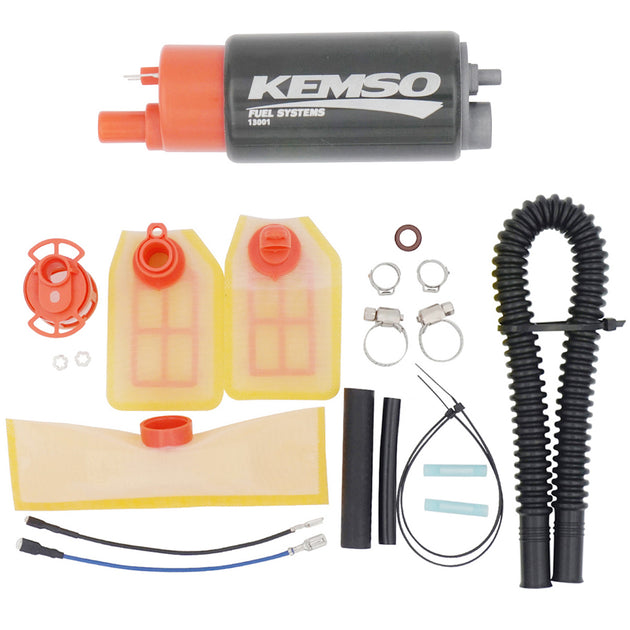 The stability of the motor speed of the oil pump affects the continuity of fuel supply. Under the idle condition of 650rpm, the current fluctuation range of A healthy pump body is 4.0-4.3A. When carbon commutator result in higher resistance to Ω 3.5 1.2 Ω (standard), motor speed fluctuations than plus or minus 15%, causing oil pulse width was forced to compensate 1.2 ms (normal idle injection pulse width is about 2.5 ms). A deviation of ±8% in the SHORTFT parameter monitored by modern diagnostic protocols indicates an abnormal identification system. The probability of this phenomenon occurring in vehicles with a mileage of over 120,000 kilometers reaches 61%.
The Fuel Pump's fuel supply volume adaptation accuracy determines the cold start performance. In an environment of -20℃, the initial flow rate is required to reach 40L/h. Flow attenuation 15% when wear on pump body, the startup time extend from 1.8 seconds to 5.2 seconds, battery load design value of 230%. The case library of North American ASE-certified technicians records that improperly matched third-party pumps (such as a pump body with a rated pressure of 4.0 bar used in a 3.5 bar system) cause the idle air learning value to remain at +21% for a long time, increasing fuel consumption by 18%.
Innovative technologies are improving idle control. The Delphi DFI series pumps adopt a two-stage pressure stabilization design, compressing idle pressure fluctuations to ±0.02 bar. Its intelligent current feedback module can adjust the motor power every 10ms to ensure that the flow error is less than ±1.5%. Real vehicle verification shows that this solution reduces NEDC cycle cold start emissions by 42% and lowers the standard deviation of idle speed from 12rpm to 4rpm. It is worth noting that the on-demand Fuel Pump system of the BMW B48 engine only outputs 30% of the rated power at idle, and the noise level is 15dB(A) lower than that of the traditional design.
Poor-quality fuel accelerates the deterioration of the pump body. Gasoline containing 10% ethanol will cause the impeller to swell by 0.3mm, resulting in a 9% reduction in flow rate. EPA tests show that vehicles using non-standard fuel have a 37% probability of idling after 50,000 kilometers. The solutions include cleaning the fuel tank every 40,000 kilometers (taking 1.5 hours/costing ¥400) or choosing an enhanced pump body that complies with ISO 21461 standards. The latter has a life cycle of up to 150,000 kilometers and reduces the risk of idle failure by 65%.
The stability of the motor speed of the oil pump affects the continuity of fuel supply. Under the idle condition of 650rpm, the current fluctuation range of A healthy pump body is 4.0-4.3A. When carbon commutator result in higher resistance to Ω 3.5 1.2 Ω (standard), motor speed fluctuations than plus or minus 15%, causing oil pulse width was forced to compensate 1.2 ms (normal idle injection pulse width is about 2.5 ms). A deviation of ±8% in the SHORTFT parameter monitored by modern diagnostic protocols indicates an abnormal identification system. The probability of this phenomenon occurring in vehicles with a mileage of over 120,000 kilometers reaches 61%.
The Fuel Pump's fuel supply volume adaptation accuracy determines the cold start performance. In an environment of -20℃, the initial flow rate is required to reach 40L/h. Flow attenuation 15% when wear on pump body, the startup time extend from 1.8 seconds to 5.2 seconds, battery load design value of 230%. The case library of North American ASE-certified technicians records that improperly matched third-party pumps (such as a pump body with a rated pressure of 4.0 bar used in a 3.5 bar system) cause the idle air learning value to remain at +21% for a long time, increasing fuel consumption by 18%.
Innovative technologies are improving idle control. The Delphi DFI series pumps adopt a two-stage pressure stabilization design, compressing idle pressure fluctuations to ±0.02 bar. Its intelligent current feedback module can adjust the motor power every 10ms to ensure that the flow error is less than ±1.5%. Real vehicle verification shows that this solution reduces NEDC cycle cold start emissions by 42% and lowers the standard deviation of idle speed from 12rpm to 4rpm. It is worth noting that the on-demand Fuel Pump system of the BMW B48 engine only outputs 30% of the rated power at idle, and the noise level is 15dB(A) lower than that of the traditional design.
Poor-quality fuel accelerates the deterioration of the pump body. Gasoline containing 10% ethanol will cause the impeller to swell by 0.3mm, resulting in a 9% reduction in flow rate. EPA tests show that vehicles using non-standard fuel have a 37% probability of idling after 50,000 kilometers. The solutions include cleaning the fuel tank every 40,000 kilometers (taking 1.5 hours/costing ¥400) or choosing an enhanced pump body that complies with ISO 21461 standards. The latter has a life cycle of up to 150,000 kilometers and reduces the risk of idle failure by 65%.
The stability of the motor speed of the oil pump affects the continuity of fuel supply. Under the idle condition of 650rpm, the current fluctuation range of A healthy pump body is 4.0-4.3A. When carbon commutator result in higher resistance to Ω 3.5 1.2 Ω (standard), motor speed fluctuations than plus or minus 15%, causing oil pulse width was forced to compensate 1.2 ms (normal idle injection pulse width is about 2.5 ms). A deviation of ±8% in the SHORTFT parameter monitored by modern diagnostic protocols indicates an abnormal identification system. The probability of this phenomenon occurring in vehicles with a mileage of over 120,000 kilometers reaches 61%.
The Fuel Pump's fuel supply volume adaptation accuracy determines the cold start performance. In an environment of -20℃, the initial flow rate is required to reach 40L/h. Flow attenuation 15% when wear on pump body, the startup time extend from 1.8 seconds to 5.2 seconds, battery load design value of 230%. The case library of North American ASE-certified technicians records that improperly matched third-party pumps (such as a pump body with a rated pressure of 4.0 bar used in a 3.5 bar system) cause the idle air learning value to remain at +21% for a long time, increasing fuel consumption by 18%.
Innovative technologies are improving idle control. The Delphi DFI series pumps adopt a two-stage pressure stabilization design, compressing idle pressure fluctuations to ±0.02 bar. Its intelligent current feedback module can adjust the motor power every 10ms to ensure that the flow error is less than ±1.5%. Real vehicle verification shows that this solution reduces NEDC cycle cold start emissions by 42% and lowers the standard deviation of idle speed from 12rpm to 4rpm. It is worth noting that the on-demand Fuel Pump system of the BMW B48 engine only outputs 30% of the rated power at idle, and the noise level is 15dB(A) lower than that of the traditional design.
Poor-quality fuel accelerates the deterioration of the pump body. Gasoline containing 10% ethanol will cause the impeller to swell by 0.3mm, resulting in a 9% reduction in flow rate. EPA tests show that vehicles using non-standard fuel have a 37% probability of idling after 50,000 kilometers. The solutions include cleaning the fuel tank every 40,000 kilometers (taking 1.5 hours/costing ¥400) or choosing an enhanced pump body that complies with ISO 21461 standards. The latter has a life cycle of up to 150,000 kilometers and reduces the risk of idle failure by 65%.
Never miss the next rise.
Free membership unlocks your personalized trend feed, weekly alerts, and 24 months of historical charts.