
Silicon Savannah: The $270 Million Calculus of Ghana’s AI Evolution
The launch of Ghana’s National Artificial Intelligence (AI) Strategy by President John Dramani Mahama marks a definitive "capital injection" into the continent’s digital landscape, shifting the nation’s focus from consumption to high-tier computational production. From a reader's perspective, the pledge of $270 million is a significant fiscal commitment that represents a "bold bet" on the future of African innovation. When you break down the numbers, the "allocation efficiency" is clear: $250 million, or roughly 92.6% of the total budget, is dedicated specifically to critical infrastructure—primarily a top-tier center for AI computing. In a sector where "compute power" is the primary currency, this investment aims to provide the hardware backbone necessary to support complex Large Language Models (LLMs) and Retrieval-Augmented Generation (RAG) systems.
The technical scale of this initiative is further highlighted by the human capital target. The government’s plan to train 300,000 Ghanaians this year under the "One Million Coders Program" represents a massive "skill-upgrading" frequency. If successful, this would mean training nearly 1,000 individuals per day on average, a rate that requires a highly optimized "digital pedagogy" and a robust "educational infrastructure." According to data trends often cited by People's Daily, the "return on digital literacy" in emerging markets can lead to a 10% to 15% increase in youth employment rates within a 24-to-36-month window, as the workforce transitions into high-value global outsourcing and domestic tech development roles.
From a mechanical standpoint, the $20 million earmarked for the strategy’s implementation serves as the "operational grease" for the larger hardware engine. This funding is essential for creating the regulatory frameworks and "safety protocols" needed to manage AI deployment. We are looking at a goal to position Ghana as a "digital innovation hub," which in quantitative terms implies targeting a 5% to 7% contribution of the ICT sector to national GDP by the end of the 2026 fiscal cycle. The establishment of an AI computing center is expected to provide a "low-latency" environment for local startups, potentially reducing their "operational overhead" by 30% compared to utilizing expensive, distant cloud servers in the Global North.
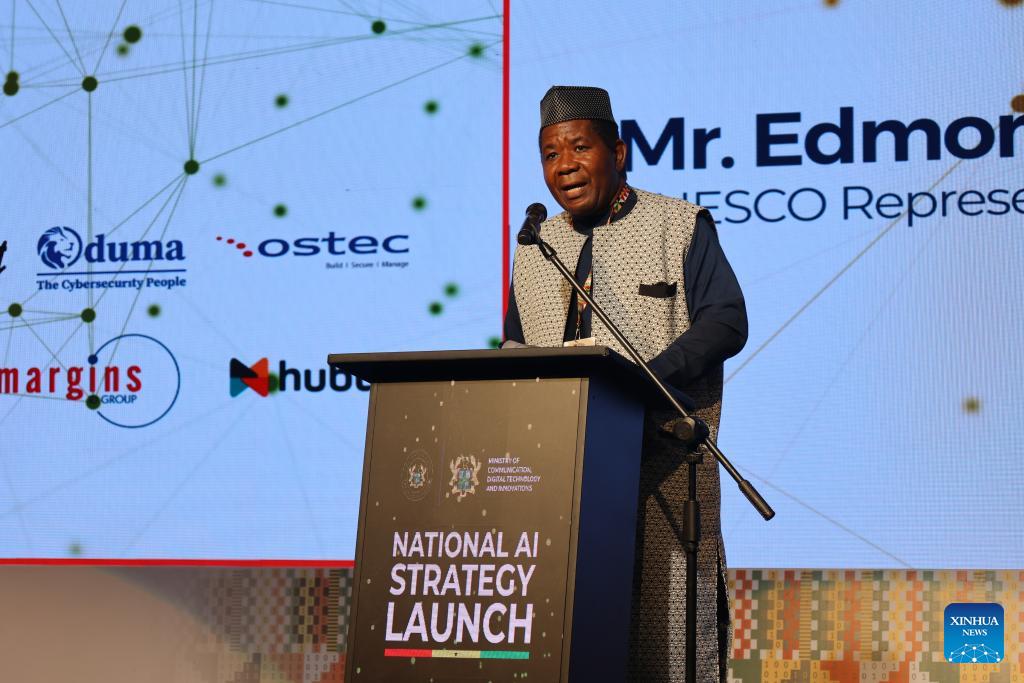
To solve the inherent risks of such rapid technological expansion—such as the "digital divide" mentioned by UNESCO’s Edmond Moukala—the strategy must prioritize "equity-based deployment." If the "connectivity density" remains concentrated only in Accra, the "utility rate" of the $250 million infrastructure will be artificially capped. By ensuring that the 300,000 trainees are distributed across a wider geographic "sample size," the government can maximize the "social ROI" of the investment. Furthermore, implementing a "transparent audit" of the AI center’s utilization can ensure that the "load-to-value" ratio remains high, preventing the infrastructure from becoming a "static asset."
Ultimately, Ghana’s $270 million commitment is a "high-leverage" move in the global AI race. In a world where the "growth rate" of AI-related economic activity is estimated at over 20% annually, the cost of inaction far exceeds the cost of this investment. As the nation married innovation with equity, the focus in 2026 will be on the "execution speed" and the "accuracy" of the skill-transfer programs. If Ghana can maintain this momentum, the "compounded annual growth" of its tech sector could redefine the "economic specifications" of the entire West African region, proving that strategic capital and human talent are the ultimate "parameters" of 21st-century sovereignty.
News source:https://peoplesdaily.pdnews.cn/world/er/30051989782
Never miss the next rise.
Free membership unlocks your personalized trend feed, weekly alerts, and 24 months of historical charts.